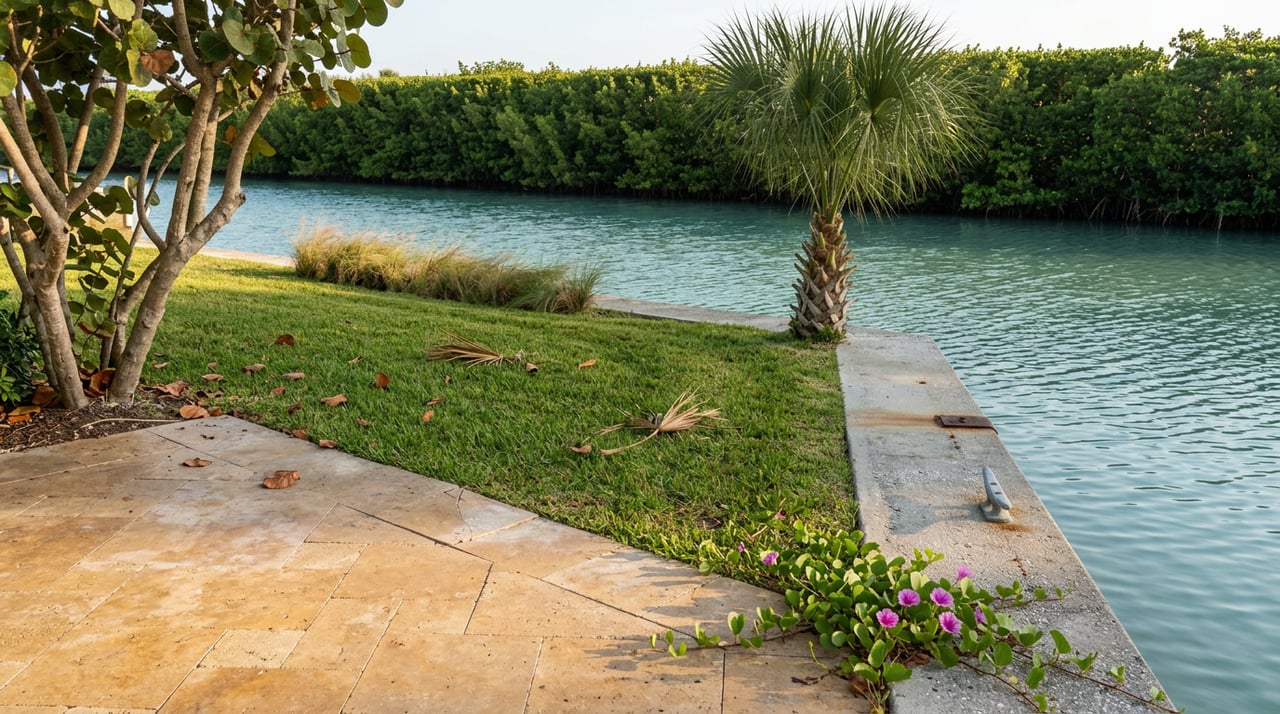
In February 2026, the City of St. Petersburg told anyone paying attention that its seawalls were in rough shape. Engineers hired by the city inspected 81,000 linear feet of city-owned wall and found that 53 percent rated "Poor" or worse under American Society of Civil Engineers standards, the kind of finding that generates headlines and public hearings. Two virtual meetings followed within a week, on Feb. 10 and Feb. 17, and the city set a target of finishing a prioritization plan by June 2026.
If you own waterfront on Snell Isle, almost none of that describes the wall in front of your dock.
Fifteen Miles the City Owns, Ninety-Five It Doesn't
The study behind the February hearings was funded by a $900,626 Community Development Block Grant and scoped, from the start, to municipal seawalls only. According to the city's own Seawall Master Plan page, St. Petersburg owns roughly 80,000 linear feet of seawall, about 15 miles. Private owners hold the other 500,000 linear feet, close to 95 miles. On a peninsula built around deep-water docks and protected canals, that private share is where nearly every Snell Isle waterfront lot sits.
The city's engineering director, Brejesh Prayman, was asked directly at the February hearings whether the city planned to help private owners fix or fund their walls. He acknowledged the city currently lacks any such program and said staff are exploring federal grant options, without a timeline attached. The assessment that made local news focused on municipal walls, so its findings do not describe the condition of an individual private seawall.
A longtime resident put the private-owner reality more bluntly at one of the public meetings, describing seawall work as an expensive endeavor with real risk of uneven contractor quality entering the market as demand rises. That concern makes the condition of each wall, and the quality of contractor proposals, important considerations for owners planning repairs.
Where a Bad Wall Meets a Renovation Budget
Renovation and permitting details can matter in a transaction. Snell Isle sits in an AE flood zone, and the City of St. Petersburg enforces the FEMA substantial improvement rule on every permitted project.
A failing seawall can change the scope of a renovation. If a wall needs to come out to be repaired, or if a renovation touches anything near the water line, the seawall conversation becomes part of the permit review before design work even starts.
The Snell Isle mansion at 416 Brightwaters Blvd. NE that hit the market for $12.5 million in April 2026 had already undergone extensive renovations by the time it listed. That is the pattern worth noticing: older waterfront estates on Snell Isle carry high resale value, and a seawall in poor condition can affect renovation scope.
Three Questions Worth Asking Before You Sign Anything
- Is the seawall on this specific parcel publicly or privately owned, and when was it last inspected or repaired? The city's interactive seawall viewer, linked from the Seawall Master Plan page, lets you check ownership and condition data by address before you assume anything.
- Who is pulling the permit, and through which office? Snell Isle permits run through City of St. Petersburg Development Services rather than Pinellas County, since the entire island sits within city limits.
What the Current Listings Look Like While You Sort This Out
As of Aug. 13, 2026, there were 11 waterfront homes listed for sale on Snell Isle, with a median list price of $1.2 million and an average time on market of 104 days. That pace is slower than the frenzied years just behind us, and it matters here specifically because it gives buyers actual room to order a seawall inspection and get a straight answer on condition and ownership before waiving contingencies. It also gives sellers time to get ahead of the question rather than answer it under pressure during due diligence.
For a seller, that means having documentation ready before a private seawall becomes a negotiating point rather than a settled fact. Our guide to prepping a Snell Isle waterfront home for sale covers the broader punch list, and a current home valuation is the right starting point for understanding how a wall's condition, or its documented lack of issues, factors into where a listing should be priced.
The Permit Clock, If You Decide to Fix It
Standard permit review through City of St. Petersburg Development Services runs two to five weeks.
The permit timeline is worth knowing if a seawall issue surfaces during a transaction and someone needs an answer before closing.
Quick Answers
Is my Snell Isle seawall public or private? Almost certainly private. Confirm it on the city's seawall viewer rather than assuming, since a handful of segments near bridges and public rights-of-way are city owned and maintained differently.
How long does a seawall or dock permit take in St. Petersburg? Standard review is two to five weeks through City of St. Petersburg Development Services, the same office that handles all Snell Isle building permits.
A seawall is not a line item most buyers think to ask about, and it is not a detail most sellers think to document, until a deal is already moving and someone needs an answer fast. Knowing whether a specific wall is public or private, and where it sits against the city's condition ratings, gives buyers and sellers useful context early in a transaction. Pedone Elite works these details into every Snell Isle transaction before they become a problem at the table. Schedule a Free Consultation and we'll walk your specific property, wall included, before you list or make an offer.
This article is general information, not legal, tax or financial advice. Consult a qualified professional about your situation.