Drive Snell Isle Boulevard on any given morning and you will pass a lion, then a panther, then a griffin standing sentry at an intersection, all of them concrete, all of them looking like they have guarded that corner since Coolidge was president. Most residents assume that. It is a reasonable assumption. It is also wrong for the majority of what you are looking at.
The statues are real. The history behind them is real. But the specific animal on the specific pedestal near your house has almost certainly been replaced, repainted, or rebuilt since the 1920s, and the organization responsible for keeping it there is not the city of St. Petersburg. It is a volunteer group funded by your neighbors, running on donated paint and bleach, working corner by corner every spring.
What C. Perry Snell Actually Built
C. Perry Snell developed the island in the 1920s and wanted it to feel imported, not local. He had traveled through Switzerland and Norway and came home determined to bring that sense of old-world formality to a dredged mangrove flat off Tampa Bay. In his own words, he was "endeavouring to lend a foreign note to match the warmth and balm of our sunshine." The statues were his method: concrete lions, tigers, panthers and griffins, some shipped from Europe, others cast domestically, installed at street corners as a signature.
That signature did not survive intact. Not long after the statues were erected, vandals started to damage them or haul them away, and by 1980, nearly all of the originals were gone. The city itself contributed to the damage during a round of sewer line work. High schoolers were repeat offenders. One theft, uncovered decades later, traced back to a locker-room prank war between Northeast High and St. Petersburg High in the 1950s. Two panthers vanished from Snell Isle and turned up guarding a private driveway a few miles away, where they stayed for 53 years before a real estate agent touring the home in 2007 recognized them and called it in. Tampa Bay Times documented the full story, down to the police evidence room where the statues eventually landed while ownership was sorted out.
That single anecdote tells you something the passing glance from your car does not: the statue population on Snell Isle has been a moving target for a century, not a fixed inheritance.
The Group That Rebuilt What Was Lost
The organization now responsible for the statues is the Snell Isle Property Owners Association, and its own history explains why replacement, not preservation, has always been the point. SIPOA traces back to 1936, when the island had fewer than twenty homes. The version that exists today restarted in 1980 under its first president, Jim Davis, and its founding mission was specific: replacing the statues that had been stolen or destroyed. The group held its first formal meeting in February 1987, launched its newsletter, The Panther, that July, and did not put up a website until January 2014.
None of that history involves a city department or a preservation grant. SIPOA is a dues-funded volunteer group. Membership starts at fifty dollars a year and residents can give considerably more, but there is no municipal line item covering statue maintenance. The animals on your corner exist because neighbors decided, twice now, that they should.
What's Actually Standing on the Island Right Now
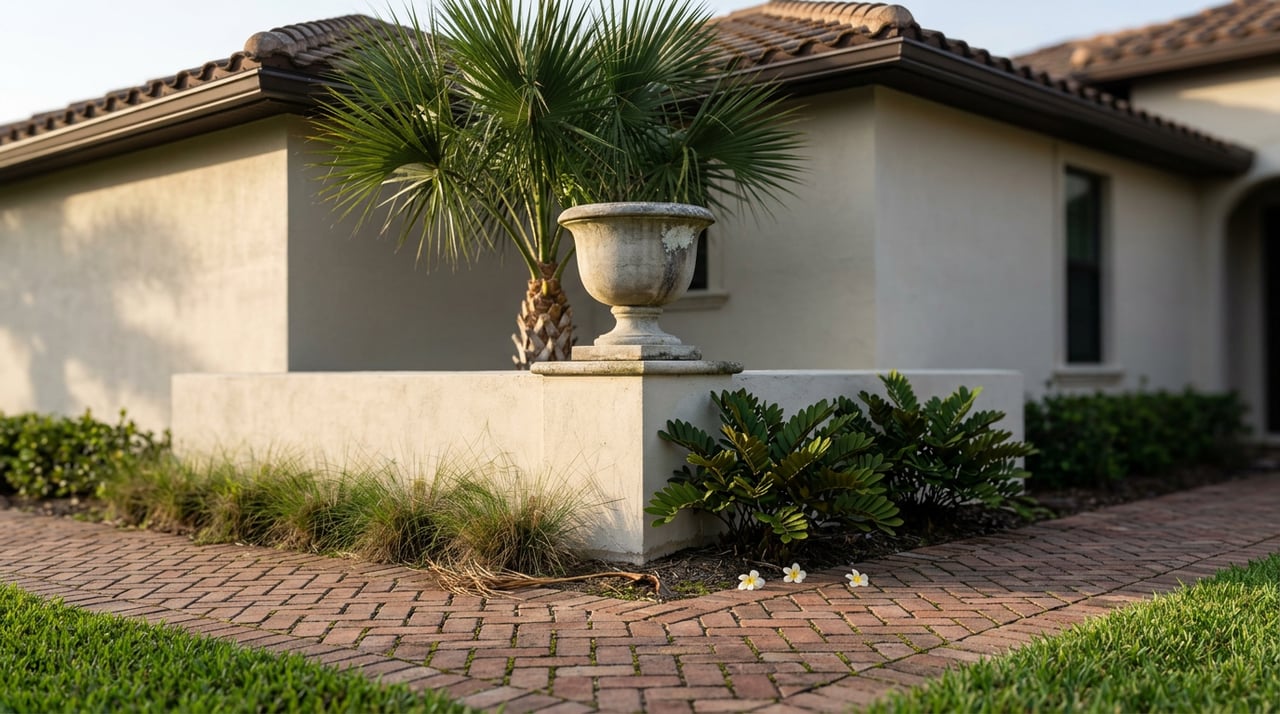
The current inventory, according to SIPOA's own alerts to residents, runs to 140 statues and 29 planters spread across the neighborhood. That is not a museum count. It is a working tally the association uses to organize its seasonal cleanup, which happens in two phases:
- Phase One, the planters. All 29 get emptied, scrubbed with a bleach and water solution, repainted where needed, and replanted with succulents that can survive a Florida summer with minimal watering.
- Phase Two, the animals. Later in the same year, volunteers turn to the lions, panthers and griffins themselves, cleaning and touching up paint on statues that have taken a season of salt air and sun.
SIPOA has explicitly invited residents to "adopt" a planter near their home, supplying the bleach and paint and asking only for the labor and a bit of ongoing watering. It is a low-key civic ritual that most people driving past would never guess is happening, because the corner just looks tidy again.
What One Bad Night Can Undo
The fragility of this system showed up clearly in one widely circulated SIPOA alert. A vehicle heading north on Cordova toward Eden Isle Boulevard struck a panther statue hard enough to destroy it completely. SIPOA's own account notes the statue weighed about 1,200 pounds, which gives you a sense of the speed involved, since a glancing tap does not flatten twelve hundred pounds of concrete. The driver did not stop. The only reason anyone knows what happened is that a resident's Ring camera caught it, and SIPOA circulated the footage asking neighbors to watch for a dark-colored vehicle with fresh front-end damage.
That was not an isolated incident. The same alert references a commercial eighteen-wheeler that destroyed a SIPOA planter at the corner of Snell Isle Boulevard and Nina, serious enough that the association filed charges. Between the two, you get a clear picture: the statues and planters are not protected infrastructure. They sit at the edge of live traffic lanes on a neighborhood where landscaping trucks, delivery vans and commercial vehicles pass daily, and every one of them is one distracted turn away from becoming a repair project funded by volunteer dues.
Why This Matters If You Already Live Here
If you walk or bike the loop around Coffee Pot Bayou, as many residents do, you have already passed a dozen of these statues without registering the maintenance behind them. That is by design. A well-kept planter does not announce itself. It just looks like the corner has always looked that way. Our season-by-season guide to the Coffee Pot Bayou loop covers the walking route itself, but the statues along that route are worth a second look now that you know what keeps them standing.
The next time you notice a lion that looks freshly painted or a planter suddenly full of new succulents, you are looking at a neighbor's Saturday morning, not a city contractor's invoice. The next time you notice one missing or chipped past recognition, you are looking at the gap between what SIPOA can fund through voluntary dues and what a full restoration actually costs. Both are true at the same time, on the same streets, often within a few blocks of each other.
C. Perry Snell wanted his island to feel like it had always been finished. A century later, the honest version is that it never stops being worked on, corner by corner, mostly by people who live here and decided the panther on their block was worth keeping.
If you are already part of that effort, or thinking about becoming a Snell Isle neighbor and want the fuller picture of what makes this island tick beyond the statues, the team at Pedone Elite knows this neighborhood block by block. Schedule a free consultation and we will walk you through what living here actually involves, statues, boulevards and all.